

A currency almost nobody in this country thinks about became twelve percent more expensive, and equity markets fell. The two facts are the same fact.
What follows is our reading of the early-August volatility: why the yen sits at the centre of it, what a trip by the Treasury Secretary had to do with the dollar, and why we have not changed our positioning.
The World's Funding Currency
The Japanese yen funds a great deal of global investment. Institutional investors — the kind whose decisions move markets — borrow in yen because Japanese interest rates have been near zero for a generation, then carry those borrowed funds into markets elsewhere and buy assets with them. This is the carry trade, and it has been quietly supporting asset prices worldwide for years.
Borrow where money is cheap, invest where returns are higher, and keep the difference. The trade is profitable as long as two conditions hold: Japanese rates stay low, and the yen does not appreciate against the currency you invested in. Break either one and the arithmetic reverses.
Both conditions have recently come under pressure. The Japanese have grown uneasy about their depreciating currency. And China — which needs to stimulate its economy — cannot easily do so while the dollar is strong and the yuan must be held near its peg.
Why the Dollar Had to Weaken
Recall Secretary Yellen's trips to China and to Japan. Our reading is that the purpose was coordination: allowing China room to stimulate while managing its currency, and simultaneously accommodating Japan's need for a stronger yen.
Both objectives require the same thing. The dollar has to come down.
What a 12% Move Does
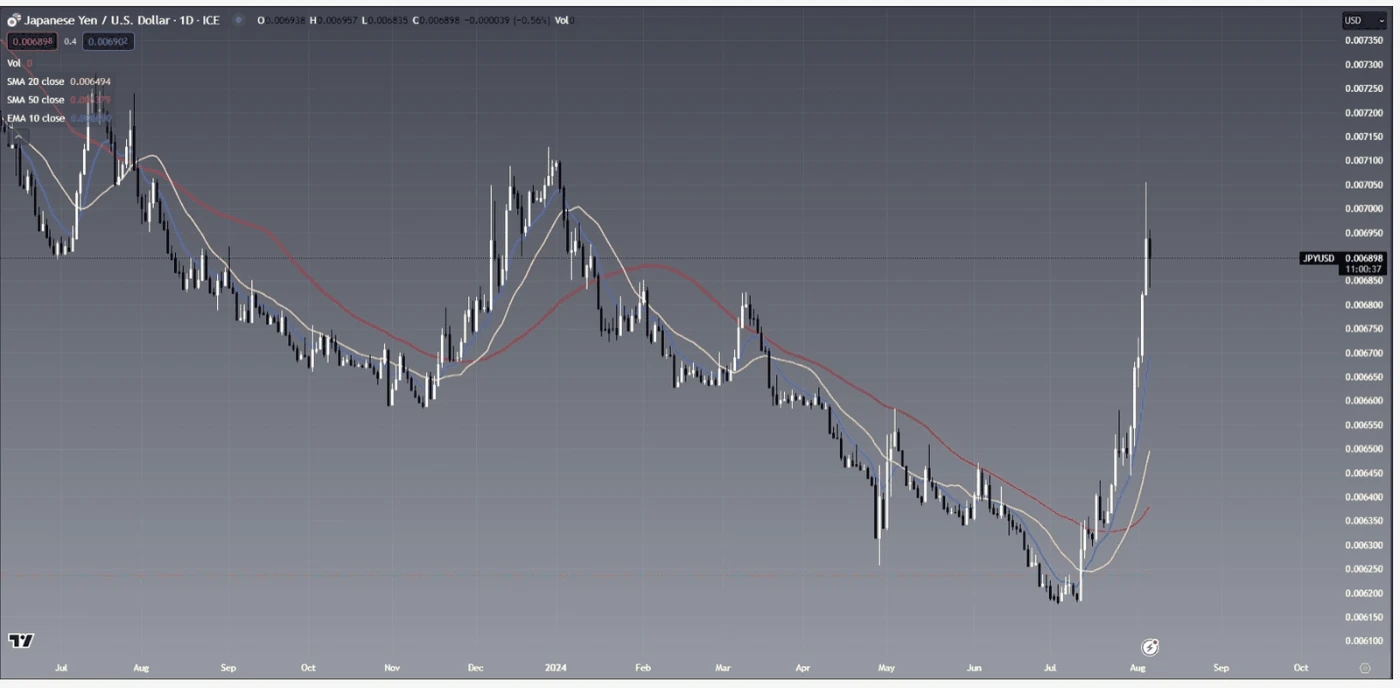
Consider what happens when the world's funding currency abruptly costs twelve percent more. Every position financed in yen becomes more expensive to hold, and the gain that justified the trade shrinks or disappears entirely.
Institutional investors become, on balance, less willing to hold equity risk. The market does not collapse on that alone — but it becomes far more vulnerable to any negative headline. The headline that tipped it: a weak US jobs number.
The jobs number is being widely reported as the reason for the selloff. It was the trigger, not the cause. The cause was a funding currency repricing by twelve percent over three weeks, which left the market with no cushion to absorb a disappointment of any kind.
What Comes Next
In a world carrying this much debt, the need to refinance it is what drives the liquidity cycle, the business cycle, and the interest rate cycle alike. To keep capital markets functioning, the major central banks have to keep adding liquidity — debasing the currency, in plainer language.
Until now the Federal Reserve could not simply stimulate. After the post-COVID inflation, easing without justification would have looked like capitulation and risked reigniting the very problem it spent two years suppressing.
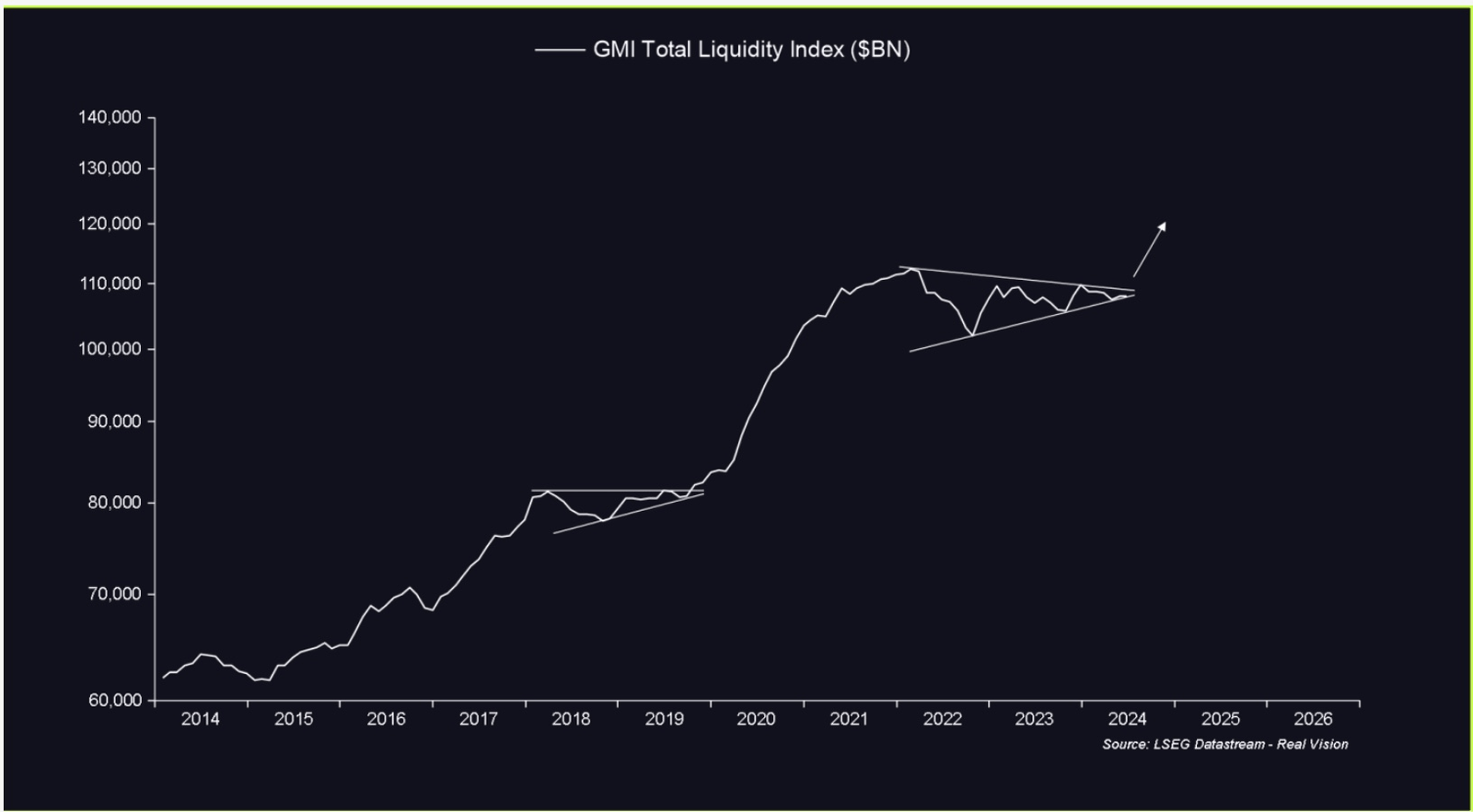
Our expectation is that this bout of volatility runs for several weeks, after which the market should respond positively to increasing liquidity.
How We Are Positioned
We continue to hold risk assets. As our clients know, we work to a medium and long-term horizon, and our thematic approach to selection is shaped by the liquidity environment and business cycle analysis, supplemented by technical work.
The data behind our capital allocation places us in the phase the research firm GMI calls Macro Summer — a period when risk-on positioning is appropriate, because financial conditions are broadly improving and the Fed is supportive.
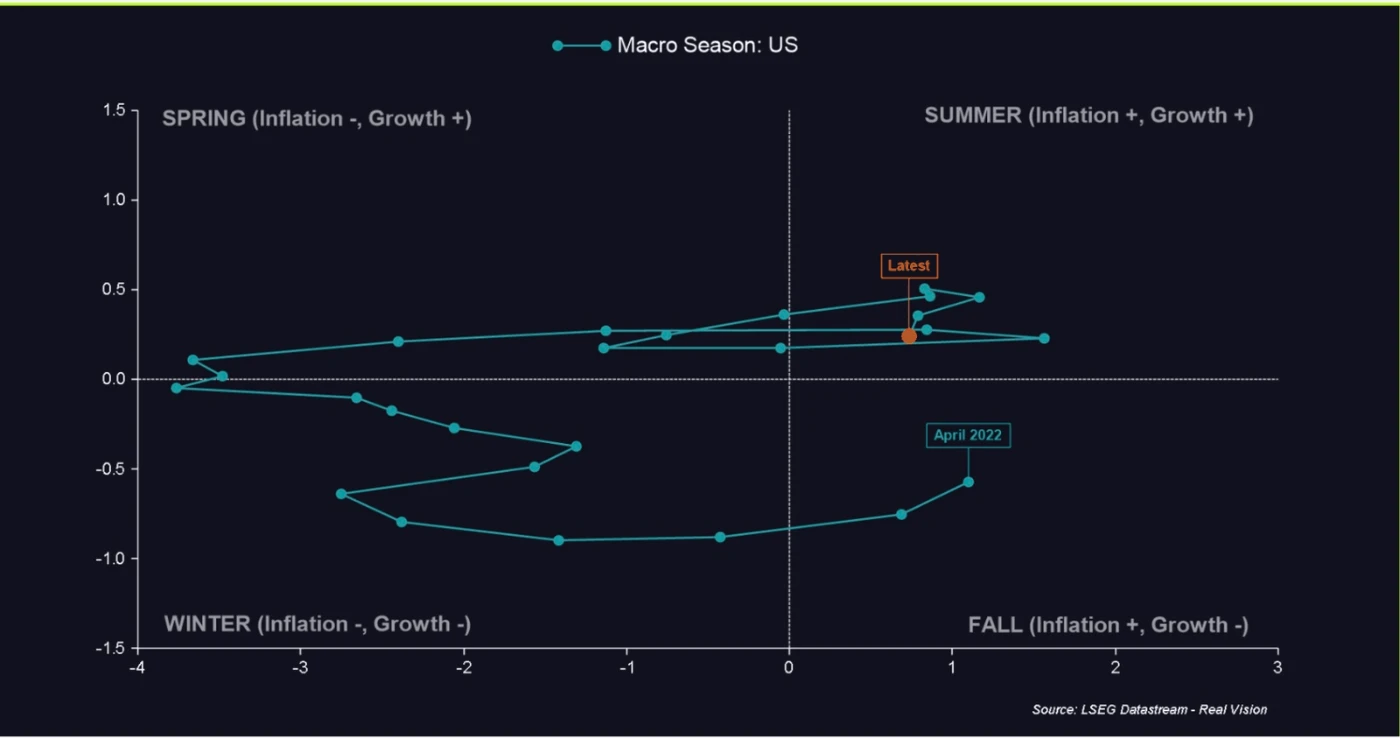
Bumps along the way are part of that phase, not evidence against it. The current week is one of them.
Macro Summer
Improving financial conditions and a supportive central bank — the part of the cycle in which risk assets, including equities and crypto, are generally rewarded.
Probabilities, not certainties
A serious escalation between Iran and Israel drawing in the United States would weigh on any positive development. Every outlook here is probabilistic and could be overtaken by events.
The key to long-term investing is not certainty. It is diligently implementing a strategy that tilts the probabilities in your favour, given the best data available.
Published 6 August 2024. This commentary reflects our views and market conditions as at that date; both may since have changed, and it is not updated to reflect subsequent developments. It is not financial advice, nor a recommendation of any security, currency, or strategy. All analysis is probability-based. Charts are reproduced from the sources credited. Investing involves risk, including the possible loss of principal.
Where Does Your Allocation Sit?
Staying invested through volatility is easier when the position was sized correctly beforehand. If you'd like to know whether yours was, we're glad to look.
заказать звонок →