


Rates are climbing, and bonds — the traditional refuge of the retired investor — are losing value in a way they have not done for decades.
The Consumer Price Index tells the same story from another angle: the cost of groceries, fuel, and nearly everything else is rising faster than a fixed income was built to absorb. For anyone drawing on a nest egg rather than adding to it, this is not an abstract concern.
What follows is a survey of the instruments we combine to build retirement income that holds its ground when rates rise — and, in places, benefits from it. First, briefly, the economics.
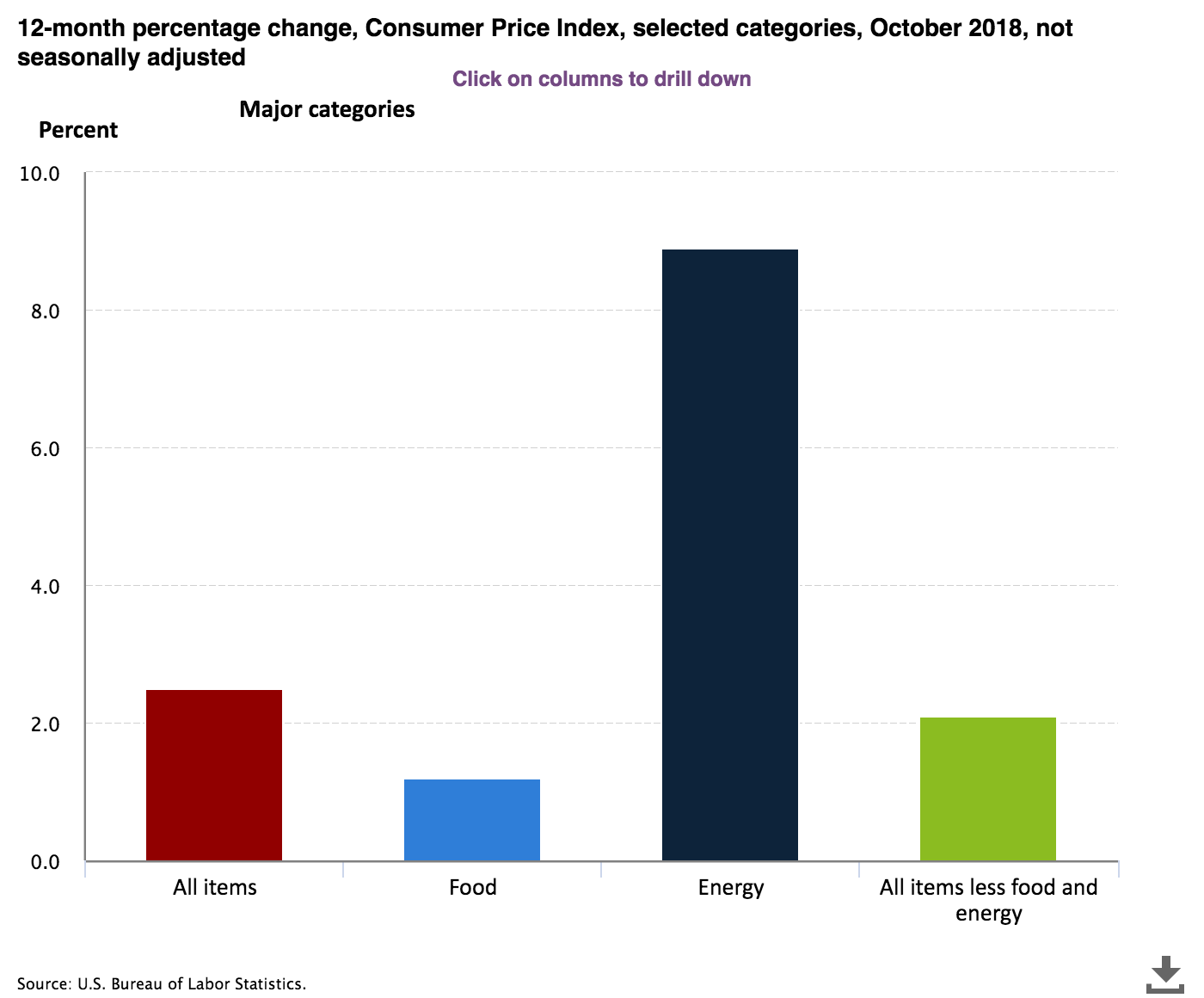
The Consumer Price Index measures the average change over time in prices paid by urban consumers for a basket of goods and services. The recent readings are up across energy, food, and the broader economy — a predictable consequence of the years of low rates that preceded them, and a trend that appears to have further to run.
With the Federal Reserve tightening and trade policy adding its own pressure, extending an existing asset base across a full retirement now requires deliberate planning. The objective is not merely to insulate a portfolio from rising rates, but where possible to profit from them.
Why Interest Rates Move Up
Macroeconomics gives a clean answer: inflation and interest rates move inversely, and the mechanism runs through the banking system.
The interest rate acts as a price for holding or loaning money. Banks pay an interest rate on savings in order to attract depositors, and receive an interest rate for money loaned from those deposits. When rates are low, individuals and businesses demand more loans — and each loan increases the money supply in a fractional reserve system. A growing money supply increases inflation. Thus a low interest rate tends to result in more inflation; high interest rates tend to lower it.
Investopedia
Rising inflation has prompted the Fed to raise rates. That will continue over the coming quarters, and it will have a direct effect on your portfolio. Higher rates raise the cost of capital for businesses and consumers, slowing the velocity of money and, in time, inflation itself.

Whether you are beginning to invest for retirement, holding a plan that needs better returns, or already drawing income, some combination of the instruments below is likely to belong in the portfolio.
Fixed Income: Five Approaches
The longer a bond's term, the more its value falls as rates rise. This property — interest rate sensitivity — is the starting point for every decision that follows.
Liquidation & Cash
Review the portfolio for bonds where yield is low and duration is high. Selling those and holding proceeds in an interest-bearing money market account is defensive — but in a rising environment it can outperform the bond it replaced.
Short-Term Bonds
These typically pay more than money market accounts. The trade-off: a short-term bond can still decline in value, while a money market balance does not — only the compounding rate moves.
Floating Rate Bonds
The coupon adjusts upward as rates rise, which sharply reduces interest rate sensitivity. Available across the spectrum, from government issues to lower-rated corporates.
Bond Ladders
Maturities staggered across several years — treasuries, municipals, even CDs. Each maturing rung is reinvested at the prevailing higher yield. No market timing required, but it needs size and an early start.
Municipal "Kicker" Bonds
Higher coupons raise yield without compromising credit quality — with the caveat that the issuer may call the bond early, leaving the proceeds to be reinvested elsewhere.
Because kicker bonds have higher-than-current-market coupons — 5 percent versus 2.50 percent, for example — they usually offer stronger yields and higher cash flow than typical bonds, with one important difference. A kicker bond can be redeemed or "called" by the issuer well ahead of its maturity date. But if it is not called early, the investor's yield rises or "kicks up" as the effective maturity of the issue extends. The risk of the call is offset by a higher yield.
RBC Wealth Management — Six fixed income strategies for a changing interest rate environment
Kicker bonds suit an investor willing to accept the uncertainty of the call in exchange for the yield. Our planners can advise on where they fit within a broader allocation.
Interest-Rate Hedged Funds & ETFs
These vehicles hold treasury, investment-grade, and high-yield corporate positions while shorting treasury futures — the short offsetting the risk of falling bond prices. The aim is a higher yield without proportionate exposure to rate increases.
Allows an investor to keep earning higher yields while potentially offsetting some or all of the risk that comes with rising rates.
Limited track record, which makes the hedging feature hard to evaluate. Many of these funds are also thinly traded.
Pros and cons as noted by Schwab — Six strategies for dealing with rising interest rates
The returns can be attractive, but the category is relatively new. This is one to research carefully and discuss with an experienced planner before committing capital.
Real Estate, Public and Private
REITs
Rising rates raise the cost of servicing debt, which can compress dividends. But there is a counterweight: as mortgages become harder to obtain, the renter population grows — and multifamily REITs benefit directly. Short lease durations give the manager room to reprice.
Direct & Fund Structures
Mortgage Investment Corporations, private equity real estate funds, and limited partnerships have historically returned 6% to 12% annually. Prices do not move daily, which keeps attention on fundamentals — at the cost of liquidity and a multi-year lockup.
Rate increases should be accompanied by a strong economy, translating to Net Operating Income growth and thus better property prices. MICs see increased demand as more people turn to private mortgages in light of tougher regulations and higher rates that prevent them qualifying at a regular bank. Unless these assets are severely leveraged, the long-term private real estate investor should not be unduly concerned with their position — especially if cash flow is strong.
Hawkeye Wealth — Real Estate in a Rising Interest Rate Environment
Private Placements
Credit Funds
Yields commonly between 6% and 14% per year, with little fluctuation from rate risk — valuations rest on independent audits of the underlying investments rather than daily market sentiment.
Hedge Funds
A range of strategies designed to produce income with relative stability, structured similarly and subject to the same access rules.
Both categories are generally restricted to Accredited Investors, Qualified Investors, or Qualified Purchasers as defined by the SEC. Minimums typically run from $50,000 to $500,000 or more, with multi-year lockups during which interest is paid but principal cannot be accessed.
Annuities
Annuities began as vehicles for guaranteed income over a fixed term or a lifetime. The category has since broadened: some types now function purely as investment vehicles with no downside risk, while others retain the original guarantee.
In a rising rate environment they can serve as a low-risk income strategy — a fixed rate of interest, or participation in market upside, while remaining insulated from market losses. One further advantage over a taxable account: capital gains and income tax are deferred until funds are withdrawn.
Fixed Annuity
A set payout regardless of what rates do. Payments arrive on schedule and do not change with the market — closer in character to a CD than to an investment.
Fixed Index Annuity
Complete protection from downside, with returns linked to a market index. Suited to long-term investors uneasy about bonds but unwilling to accept market losses.
Variable Annuity
Value moves with the underlying investments, and a later distribution date can mean a larger payout. Many planners still favour the fixed version — retirees tend to value a predictable monthly figure over an uncertain larger one.
Income can begin immediately or at a future date, paid monthly, quarterly, or annually. The amount depends on the underlying investment, the payment frequency, and the investor's age. Some annuities carry no fees; those guaranteeing an income stream carry substantial ones.
Although interest rates are on the rise, we feel they will remain relatively low while the increase will be measured. If early retirement investors and existing retirees don't know what strategies to implement, or what mix of securities to hold across bonds, real estate, annuities, and hedged funds, their portfolio performance could suffer.
In Closing
None of these instruments works in isolation. What produces durable retirement income is a portfolio built around one household's preferences and needs — with a clear view of the strategy from both the micro and macro side, an understanding of every instrument in use, an allocation that is deliberately deployed, and active monitoring with adjustment where conditions demand it.
In the present rate environment, leaving that work undone carries real consequences for retirement readiness. It is worth doing properly, and worth doing with someone who does it professionally.
The content provided is for informational purposes only and should not be considered a recommendation of any particular strategy or investment product, or investing advice of any kind. Information contained herein has been obtained from sources deemed reliable, but Spire Wealth Management, LLC and its affiliates do not guarantee its accuracy. The views and opinions expressed in this article are those of the authors and do not necessarily reflect the opinions of Spire Wealth Management LLC, Spire Securities LLC or its affiliates. Investing involves risk, including the possible loss of principal.
Build the Strategy Around Your Position
Which of these instruments belongs in your portfolio depends on your age, your income needs, your tax position, and what the rest of the plan is already carrying. We're glad to work through it with you.
заказать звонок →