Federal Employee Retirement Planning
FERS, the TSP, FEHB and Social Security each have their own rules and deadlines. We bring them together in one retirement plan.
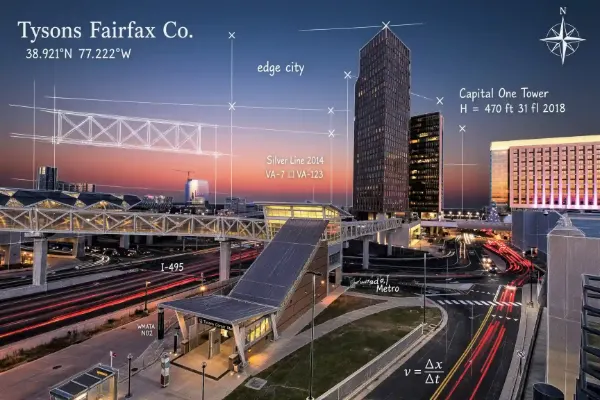
Fiduciary advice for federal employees across Virginia, Washington, D.C. and Maryland, from our office in Vienna, Virginia.
FERS & TSP Retirement Planning
for Federal Employees
From your retirement date and survivor benefit election to TSP withdrawals and FEHB, we help you make the federal decisions that are hard to undo, and coordinate them with the rest of your finances.
BOOK A CALL →The Decisions That Shape a Federal Retirement

Choosing Your Retirement Date
Your Minimum Retirement Age (55 to 57, depending on birth year) and years of service decide whether you leave with an unreduced pension, the FERS supplement or a reduction. MRA+10, 60 with 20 years and 62 with 5 each lead to a different income for life, so we model each date before you file.

FERS Pension & Survivor Benefit
The basic pension is generally 1% of your high-3 salary per year of service, or 1.1% at 62 or later with 20 years. A full survivor benefit costs 10% of the pension, a partial one 5%, and the choice is hard to reverse.

TSP Withdrawals & Rollovers
Installments, partial withdrawals, an annuity or a rollover to an IRA: each changes your taxes, flexibility and investment choices. We plan the order of withdrawals across the TSP, IRAs and taxable accounts, including required minimum distributions.

FEHB, FEGLI & Medicare
To keep FEHB in retirement you generally need five years of coverage before you retire. We help you decide whether to add Medicare Part B at 65 and what to keep or drop from FEGLI as your needs change.

Social Security & the FERS Supplement
The FERS supplement bridges the years to 62 for those who qualify, but it is cut if you keep earning above the Social Security limit. We coordinate it with when you claim Social Security and with your pension's cost-of-living adjustments.
The Federal Retirement Time Machine
Pick the year you retire and live through the markets that actually followed. Your FERS pension and Social Security cover part of your spending; the TSP and other savings cover the rest. Then meet your twin: same returns, in reverse order.
Retiring in 2026? Your first year isn't written yet. See how the hardest starts in history played out: or
Your FERS basic pension, Social Security and any other pension. The TSP and savings cover the rest: of savings in year one.
Fixed: the same spending every year, raised with inflation, no matter what markets do.
History cannot tell you which twin you will be. A plan can decide in advance what you will do in either case.
Hypothetical illustration using historical annual returns of the S&P 500 with dividends and 10-year U.S. Treasury bonds (Damodaran, NYU Stern) and CPI inflation (BLS), 1928–2025. Amounts are shown in dollars of your retirement year. Portfolios are rebalanced yearly; withdrawals are taken at the start of each year; guaranteed income is assumed to keep pace with inflation (FERS cost-of-living adjustments can be smaller than inflation and are generally not paid before 62). Indexes cannot be invested in directly; fees and taxes are not included. Past performance does not guarantee future results. This is not investment advice.
Federal Retirement: Common Questions
When can I retire under FERS?
You can retire with an unreduced pension at your Minimum Retirement Age (55 to 57, depending on your birth year) with 30 years of service, at 60 with 20 years, or at 62 with 5 years. At your MRA with 10 to 29 years you can retire with a pension reduced by 5% for each year you are under 62, unless you postpone it. The best date also depends on the FERS supplement, FEHB and your other savings.
How is the FERS pension calculated?
Generally 1% of your high-3 average salary for each year of creditable service, or 1.1% if you retire at 62 or older with at least 20 years. Electing a survivor benefit reduces the pension by 10% for a full benefit or 5% for a partial one.
What is the FERS supplement?
A payment that approximates the Social Security benefit earned during federal service. It is paid from retirement until age 62 to those who retire on an immediate, unreduced pension before 62, for example at MRA with 30 years or at 60 with 20. It is reduced if your earnings exceed the Social Security earnings limit.
Should I roll my TSP into an IRA when I retire?
Not automatically. The TSP has very low costs and allows partial and installment withdrawals; an IRA offers more investment choice and estate planning flexibility. We compare both for your situation, including taxes and required minimum distributions.
Can I keep FEHB in retirement?
Generally yes, if you retire on an immediate pension and were enrolled in FEHB for the five years before retirement, or continuously since you were first eligible. Your FEHB plan also affects whether Medicare Part B makes sense at 65.
Do you work only with federal employees in Virginia?
No. Sovereign Wealth Management is a fiduciary Registered Investment Adviser based in Vienna, Virginia. We work with federal employees and retirees across Virginia, Washington, D.C. and Maryland, in person or by video.
Educational information only, not tax, legal or investment advice. Federal benefit rules depend on your service history and can change; confirm your figures with your agency's benefits office or OPM.
Complementary Services that Work for You
Financial Planning
Retirement is a date on a plan, not a number in an account. What it takes depends on the spending it has to support.
Tax Planning
Which account you draw from first changes the lifetime bill. Roth conversion windows close quietly once distributions begin.
Insurance Planning
Medicare enrolment windows and long-term care are the two health decisions that reshape a retirement budget the most.
Estate Planning
What remains at the end is the other half of the same calculation. Beneficiary designations override a will — often unintentionally.
Acquire More Actionable Insights
Five Decisions That Determine What a Retirement Looks Like
Social Security timing, Medicare, income sequencing, federal benefits, and long-term care — with attorney Gerarda Culipher on the legal half.
Turning a Balance Into an Income That Lasts
How 401(k)s, IRAs, and the Thrift Savings Plan interact once withdrawals begin — and why the order matters more than the total.
A Bad First Decade Costs More Than a Bad Average
Drawing income during a drawdown does permanent damage. What protects a portfolio in the years it can least afford to fall.
Connect With Us to Learn More
Sovereign Wealth
Management
Services
Disclaimer & Business Continuity Plan
Sovereign Wealth Management, LLC ("Adviser") has adopted a Business Continuity Plan ("BCP") pursuant to the Investment Advisers Act and the rules and guidance of the U.S. Securities and Exchange Commission ("SEC") and/or the laws of Virginia where the Adviser is registered. The purpose of the BCP is to define the strategies and plans that will be used by Adviser during a significant business disruption ("SBD"). The BCP is prepared to address both internal SBDs, such as a fire in Adviser's building, and external SBDs, such as a natural disaster, terrorist attack, or citywide power disruption.
Our Business Continuity PlanIn the event of an SBD, Adviser will safeguard employee lives and firm property. Adviser will work to re-establish the systems necessary to quickly recover and resume operations, protect Adviser's books and records and allow Adviser's customers to transact business to the extent reasonable and practical under the circumstances. Adviser's BCP addresses: alternate office locations, customer access to funds and securities, financial and operational assessments, data backup and recovery, critical systems, alternative communications with customers, employees, and regulators, and critical business constituents.
Contacting Adviser and Accessing Funds and SecuritiesIf you are not able to contact Adviser through our regular telephone number, please contact us by email at info@sovereign.global. For questions relating directly to accessing your funds and securities, please contact your custodian, Interactive Brokers, Charles Schwab or BitGo.
Varying DisruptionsSBDs can vary in their scope, from only our firm's office, the business district where our firm is located, the city where we are located, or the whole region. Within each of these areas, the severity of the disruption can also vary from minimal to severe. During a SBD, the Adviser will continue to do business but the ability of Adviser to fully function will be dependent on outside sources outside of its control, including the availability of electricity, telephones, Internet, transportation, and the functioning of institutions and markets worldwide. Nothing in Adviser's BCP or this disclosure statement is intended to provide a guarantee or warranty regarding the actions or performance of Adviser.
Additional InformationIf you have questions about our business continuity planning, please contact us at 703-713-2954 or info@sovereign.global.